
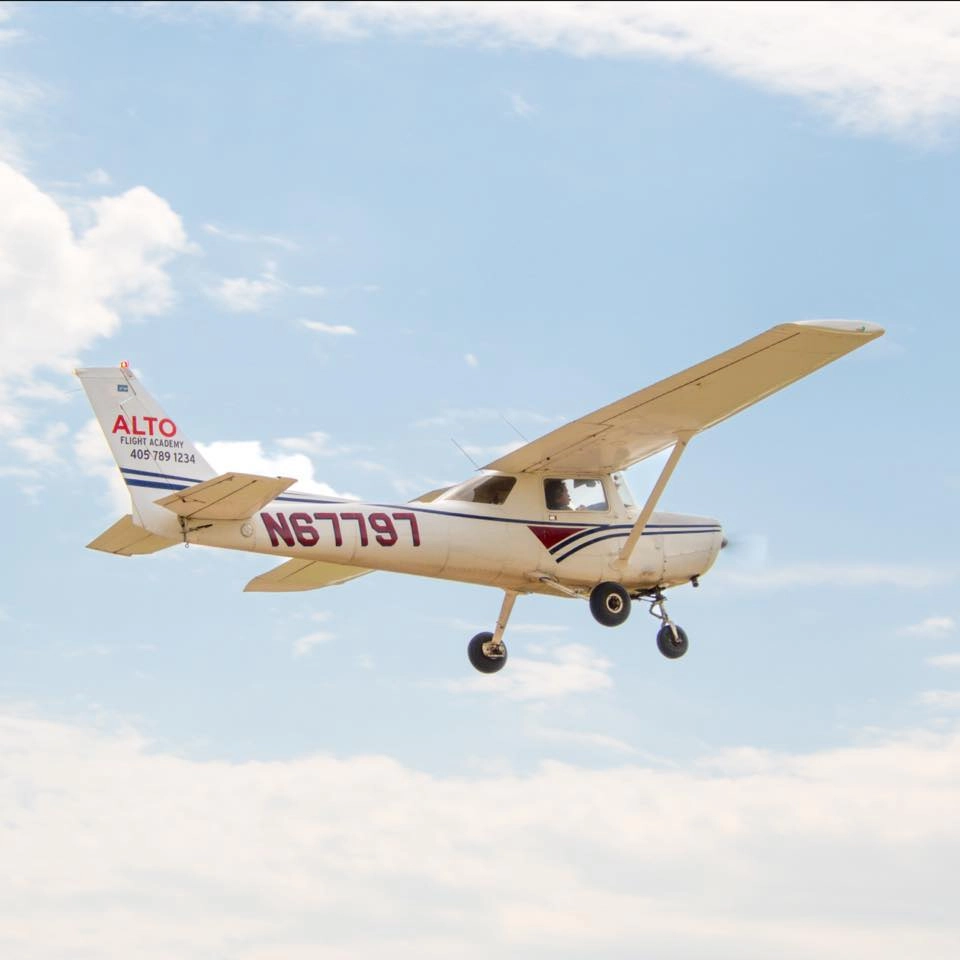
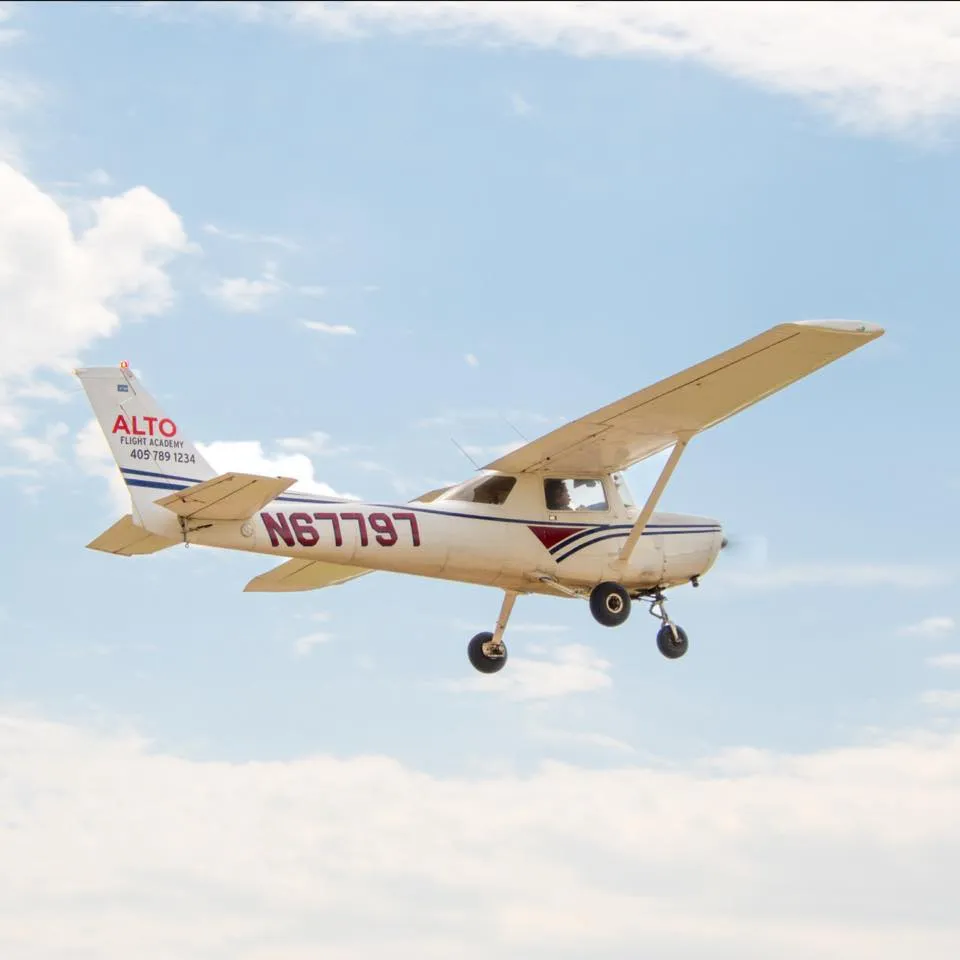
The wind is howling at 25 knots. Gusting to 35. Direct crosswind on Runway 17 at Sundance Airport.
Most student pilots would look at that weather briefing and cancel their lesson. Too windy. Too challenging. Too risky. They would reschedule for a calm day when the flags hang limp and the windsock barely moves.
But if you are training to become a professional pilot, that is exactly the wrong decision.
Airlines do not operate in calm conditions. They fly in crosswinds, turbulence, microbursts, wind shear, and rapidly changing weather. If your entire training experience consisted of perfect 5-knot headwinds and clear skies, you will be dangerously unprepared the first time you land a regional jet in 30-knot crosswinds with 150 passengers depending on your skill.
This is why Oklahoma’s brutal weather is not a disadvantage. It is your competitive advantage.
At Alto Flight Academy in Yukon, Oklahoma, you train in Tornado Alley, where southwesterly winds, sudden gusts, and rapid weather changes are part of everyday flying. Every crosswind landing you practice here makes you a more capable, more confident, and more employable pilot. While students in calm-weather states are waiting for wind to practice crosswind technique, you are mastering it every single day.
This is why Oklahoma pilots stand out in airline interviews. This is why hiring managers notice your logbook. And this is why training in “terrible” weather is actually your ticket to becoming an elite aviator.
The Airline Reality: Why Perfect Weather Creates Dangerous Pilots
Here is a truth that flight schools in calm-weather states do not advertise. Training exclusively in benign conditions produces pilots with critical skill gaps.
When you learn to fly in a place where the wind rarely exceeds 10 knots and weather systems move through slowly and predictably, you develop proficiency in one narrow set of conditions. Your brain learns to expect calm air, stable approaches, and predictable aircraft behavior. You pass your checkride, earn your certificates, and build your hours without ever truly testing your stick-and-rudder skills against challenging conditions.
Then you get hired by a regional airline. Your first week on the line, ATC clears you to land on Runway 27 in Denver with winds 210 at 28 gusting 35. That is a 25-knot crosswind with 10-knot gusts. Your flight controls feel different. The aircraft wants to weathervane into the wind. You are fighting the rudder pedals and the ailerons, trying to keep the nose aligned with the centerline while preventing the upwind wing from lifting.
This is where proficiency gaps turn into incidents. The FAA reports that runway excursions during landing account for roughly 20% of commercial jet accidents. A significant portion of those excursions happen because pilots do not have enough crosswind experience. They trained in calm weather, passed their checkrides on calm days, and built their hours in calm conditions. Then they encountered real weather and discovered their training did not prepare them for it.
Oklahoma eliminates that gap. When you train at Alto Flight Academy, challenging weather is not something you avoid. It is something you use as a teaching tool. The instructors here have been operating in Tornado Alley since 1995, which is over 30 years of refining techniques to turn Oklahoma’s dynamic weather into a pilot proficiency laboratory.

The Crosswind Laboratory: What Oklahoma Weather Actually Teaches You
Southwesterly winds dominate Oklahoma’s weather patterns. The state sits at the intersection of warm, moist air from the Gulf of Mexico and dry continental air from the west. When those air masses collide, they create the conditions that make Oklahoma famous for tornadoes, severe thunderstorms, and yes, persistent crosswinds.
At Sundance Airport, located at 13000 N Sara Rd, Yukon, OK 73099, the prevailing winds come from the southwest. Depending on the runway in use, that often translates to a direct or near-direct crosswind. On a typical spring day, you might see winds of 15 to 20 knots with gusts to 30. In the summer, afternoon convective heating creates sudden wind shifts and thermal turbulence. In the fall, frontal passages bring rapid weather changes that require constant aeronautical decision-making.
This is not a bug. This is a feature.
Every crosswind landing you practice builds muscle memory. Your brain learns to anticipate the aircraft’s tendency to drift. Your hands and feet develop the coordination to apply aileron into the wind while using opposite rudder to keep the nose aligned with the runway. You learn to feel when the aircraft is about to balloon, when the upwind wing is lifting, and when you need to add power or adjust your descent rate.
Here is what Oklahoma weather teaches you that calm-weather training cannot:
| Skill | Oklahoma Training Advantage | Calm-Weather Gap |
|---|---|---|
| Crosswind Landings | Daily practice in 15-30 knot crosswinds builds automatic proficiency | Pilots avoid crosswinds, build minimal experience, struggle in real conditions |
| Wind Shear Recognition | Frequent exposure to gusts and sudden wind shifts trains early recognition | Theoretical knowledge only, no practical experience until airline flying |
| Aeronautical Decision-Making | Constant weather evaluation builds risk assessment skills | Good-weather bias creates poor judgment when conditions deteriorate |
| Aircraft Control in Turbulence | Thermal turbulence and convective activity build smooth, confident control inputs | Overcontrolling and tension when encountering turbulence for the first time |
| Weather Pattern Recognition | Direct observation of fronts, convection, and rapidly changing conditions | Book knowledge without practical observation and experience |
The aircraft fleet at Alto Flight Academy is equipped to help you build these skills safely. The Cessna 172 trainers feature Garmin 430W GPS and ADS-B In & Out with Bluetooth, which gives you real-time weather radar and traffic information. You can see convective buildups on the display and make informed decisions about where to fly and when to return to the airport.
For advanced training, the Cessna 172RG with retractable gear includes a Garmin GTX 345 ADS-B Transponder and Digital Bendix King avionics with a KLN89B GPS. This aircraft lets you practice complex operations in the same challenging conditions, building proficiency in aircraft systems management while handling crosswinds and turbulence.

Safety Through Proficiency: How Oklahoma Training Makes You a Safer Pilot
Some prospective students worry that training in challenging weather is less safe than training in calm conditions. This concern is understandable but backwards.
Safety does not come from avoiding challenges. Safety comes from mastering them under controlled conditions with an experienced instructor.
When you practice crosswind landings at Alto Flight Academy, you are not being thrown into extreme conditions unprepared. You start with moderate crosswinds of 10 to 15 knots and build up gradually as your proficiency increases. Your instructor demonstrates the technique, talks you through the control inputs, and provides immediate feedback on your performance. You practice the same maneuver dozens of times until it becomes second nature.
By the time you face a 25-knot crosswind on your own, you have already landed in 20-knot crosswinds with your instructor 30 times. The conditions feel challenging but manageable because you have built the muscle memory and mental model to handle them confidently.
Compare that to a pilot who trained exclusively in calm weather. When they encounter their first significant crosswind, it is a new and unfamiliar experience. They might have read about crosswind technique in a textbook and practiced it once or twice in light winds, but they have never felt the aircraft’s full response to a strong crosswind. That lack of experience creates hesitation, tension, and poor control inputs, which is exactly how runway excursions happen.
The instructors at Alto Flight Academy follow FAA-approved rules and prioritize safe training practices. They do not send students into conditions beyond their skill level. But they also do not avoid challenging weather when it provides a valuable learning opportunity. This philosophy creates pilots who are comfortable operating in a wide range of conditions, which is the definition of a safe, professional aviator.
For more insight into how the school builds safety-focused training, read their guide on aviation safety standards for student pilots.
The Airline Interview Advantage: What Hiring Managers See in Your Logbook
When you walk into an airline interview with 300 hours logged in Oklahoma, the hiring manager immediately recognizes what that means.
You trained in real weather. Your logbook is not filled with entries that say “VFR, winds calm, visibility 10 miles.” It is filled with entries that document crosswind landings, convective avoidance, and aeronautical decision-making in dynamic conditions. That experience translates directly to the kind of flying you will do as a professional pilot.
Airlines want aviators who can handle turbulence without tensing up. They want pilots who can land in gusty crosswinds without hesitation. They want decision-makers who can evaluate rapidly changing weather and make safe, confident choices under pressure. Oklahoma training delivers all of that.
This advantage is especially valuable for pilots pursuing the full airline career pathway. After you earn your Private Pilot certificate and Instrument Rating at Alto Flight Academy, you will move on to Commercial Pilot training, where advanced maneuvers and emergency procedures are practiced in the same challenging conditions.
Many students then earn their Certified Flight Instructor (CFI) certificate and work as instructors to build the 1,500 hours required for an Airline Transport Pilot (ATP) certificate. Every one of those 1,500 hours logged in Oklahoma builds proficiency that calm-weather pilots simply do not have.
When you sit across from an airline recruiter and they ask, “Tell me about a time you had to make a difficult weather-related decision,” you will have dozens of real examples to draw from. Your competitors who trained in calm weather will struggle to answer that question with anything more than hypothetical scenarios.

Real Training, Real Conditions, Real Career Preparation
Alto Flight Academy is a family-run business founded and operated by Hal Harris, MariCris Harris, and Grace Manglicmot. It is a female and Asian-owned business that prioritizes inclusion and comprehensive aviation training for students of all backgrounds. The school has been operating since 1995, which means over 30 years of using Oklahoma’s challenging weather to build elite pilots.
The training structure follows FAA Part 61 rules, which means your schedule is customized to your availability and learning pace. When the weather is severe enough to cancel training, lessons are rescheduled without penalty. When the weather is challenging but safe, you fly and build proficiency that other pilots will not acquire until they are already working for an airline.
The school employs an on-site Aircraft and Powerplant Mechanic named Beau, who handles in-house maintenance. This means higher aircraft availability and fewer canceled lessons due to maintenance delays. When you are ready to fly, the aircraft are ready too.
For students pursuing Multi-Engine training, the school operates a 6-seat Beech Baron equipped with a Garmin GNX 375 GPS/Transponder and ADS-B In & Out with Bluetooth. This aircraft gives you multi-engine experience in the same challenging conditions, preparing you for the turbine aircraft you will fly at regional airlines.
The location at Sundance Airport provides another strategic advantage. It is an uncongested general aviation field, which means no ground delays waiting for airliner traffic. But it sits directly adjacent to Oklahoma City’s Class C airspace, so you get ATC communication training and complex airspace experience when you need it. You practice basic maneuvers and landings in uncontrolled airspace, then transition into controlled airspace for cross-country flights and instrument approaches.
For more on how the school’s location maximizes training efficiency, check out their article on mastering crosswinds at Sundance Airport.
Your First Step: Experience Oklahoma Training Yourself
The best way to understand the value of training in challenging weather is to experience it firsthand.
A Discovery Flight at Alto Flight Academy puts you in the cockpit of a Cessna 172 and lets you fly over Yukon and Oklahoma City with an experienced instructor. You will feel what it is like to manage crosswinds, make control inputs, and keep the aircraft coordinated. No high-pressure sales pitch. Just a straightforward introduction to what professional-level training actually feels like.
If you are serious about a career in aviation, ask about the full training pathway from Private Pilot Ground School through ATP certification. The staff can walk you through the exact timeline and cost based on your availability and goals.
Many students finance their training. Contact the school directly to discuss financing options and payment plans that work for your budget.
The choice is simple. You can train in calm weather and hope you develop the skills to handle challenging conditions later, or you can train in Oklahoma and build those skills from day one. Smart pilots choose the latter.
Frequently Asked Questions
-
Is it safe to train in Oklahoma’s challenging weather conditions?
Yes. Instructors follow FAA-approved safety protocols and only fly in conditions appropriate for your skill level. Challenging weather provides valuable learning opportunities when managed properly by experienced instructors. You build proficiency gradually, starting with moderate crosswinds and progressing as your skills improve.
-
What if the weather is too severe to fly on my scheduled lesson day?
Severe weather that makes training unsafe results in rescheduled lessons at no penalty to you. The Part 61 training structure allows flexible rescheduling. However, many days that other schools would cancel provide excellent learning opportunities in Oklahoma when conditions are challenging but safe.
-
Do I need special endorsements to fly in crosswinds?
No special endorsements are required. Crosswind landing technique is a standard part of Private Pilot training. However, the depth of crosswind experience you gain in Oklahoma far exceeds the minimum required by the FAA, which gives you a significant proficiency advantage.
-
How do airlines view Oklahoma flight training on a resume?
Airlines recognize that pilots trained in dynamic weather conditions have superior stick-and-rudder skills and aeronautical decision-making abilities. Your logbook demonstrates real-world experience that calm-weather pilots lack, which is valuable in interviews and initial airline training.
-
Can I train part-time if I work full-time?
Yes. Part 61 training allows you to schedule lessons around your work commitments. Weather variability in Oklahoma means some flexibility in scheduling helps, but the overall training timeline remains efficient compared to rigid Part 141 programs.
-
What happens if I am nervous about flying in windy conditions?
Nervousness is normal and expected. Instructors build your confidence gradually through proper technique instruction and incremental exposure to more challenging conditions. Most students discover that understanding the aerodynamics and practicing the technique eliminates anxiety.
-
Does Oklahoma weather delay training completion compared to calm-weather states?
Not significantly. While severe weather occasionally requires rescheduling, the higher proficiency you build per flight hour often results in faster overall completion. You master skills in fewer repetitions because each flight provides more valuable learning opportunities.
Ready to turn Oklahoma’s challenging weather into your competitive advantage? Schedule your Discovery Flight today or contact Alto Flight Academy to learn how training in real conditions builds real proficiency. For career-focused pilots, explore the complete pathway from zero experience to airline-ready commercial pilot in the school’s 2026 Pilot Career Guide.
For more information on crosswind landing technique and weather-related safety, visit the FAA’s Aviation Weather Center.