
Earning your private pilot license certification changes how you see the world. Instead of looking up at the airplanes crossing the sky, you become the person sitting in the left seat. You gain the freedom to travel on your own schedule, explore new destinations, and take your friends and family along for the ride.
Whether you want to fly for fun on the weekends or you plan to start a professional career, the first step is the exact same. You must earn your Private Pilot License, which is frequently called a PPL. This foundational certification teaches you how to control an aircraft, navigate the airspace, communicate on the radios, and make safe decisions in the sky.
If you are looking for a flight school near me in the Oklahoma City metro area, you have a distinct advantage. Training at Alto Flight Academy provides a clear, structured path to the cockpit. There are no confusing university waitlists here. You do not have to fight through the red tape of large academic programs. You simply enroll, start flying, and progress at the exact pace that fits your life.
This guide outlines the exact steps you will take to earn your wings and explains why training at a dedicated Oklahoma flight academy gives you a massive advantage in safety, cost, and efficiency.
What Does a Private Pilot License Actually Let You Do?
A Private Pilot License grants you the legal authority to fly an aircraft solo and carry passengers. You can fly across the country, land at thousands of public airports, and fly at night.
The only major restriction is that you cannot fly for compensation or hire. You cannot charge people money to fly them around. If you want to get paid to fly, you will eventually need to earn a Commercial Pilot certificate. However, every single commercial airline captain flying a heavy jet today started by earning their PPL. It is the mandatory first step on the aviation ladder.
You are legally required to log a minimum of 40 flight hours to earn this license, although most students require slightly more time to master the maneuvers. You also must pass a written knowledge test and a practical flying test with a Federal Aviation Administration examiner.
The Step-by-Step Path to Your PPL in Oklahoma
The process of becoming a pilot follows a logical, step-by-step progression. You build your knowledge on the ground first, and then you apply that knowledge in the air.
Here are the specific phases you will complete during your training.
Your Flight Training Roadmap:
| Training Phase | Minimum Requirement | What You Will Accomplish | Associated Program Link |
|---|---|---|---|
| Introduction | 1 Flight | Take the controls and experience real flight | Discovery Flight |
| Ground Theory | FAA Written Exam | Master aviation weather, navigation, and rules | Pilot Ground School |
| Flight Skills | 40 Flight Hours | Learn aircraft control, takeoffs, and landings | Private Pilot Training |
| Solo Practice | Instructor Sign-off | Fly the aircraft entirely by yourself | First Solo Guide |
| Certification | FAA Checkride | Pass the final practical exam to earn your license | Private Pilot Program |
Step 1: Take a Discovery Flight
You do not need to commit to a full training program on day one. Your journey begins with a simple Discovery Flight.
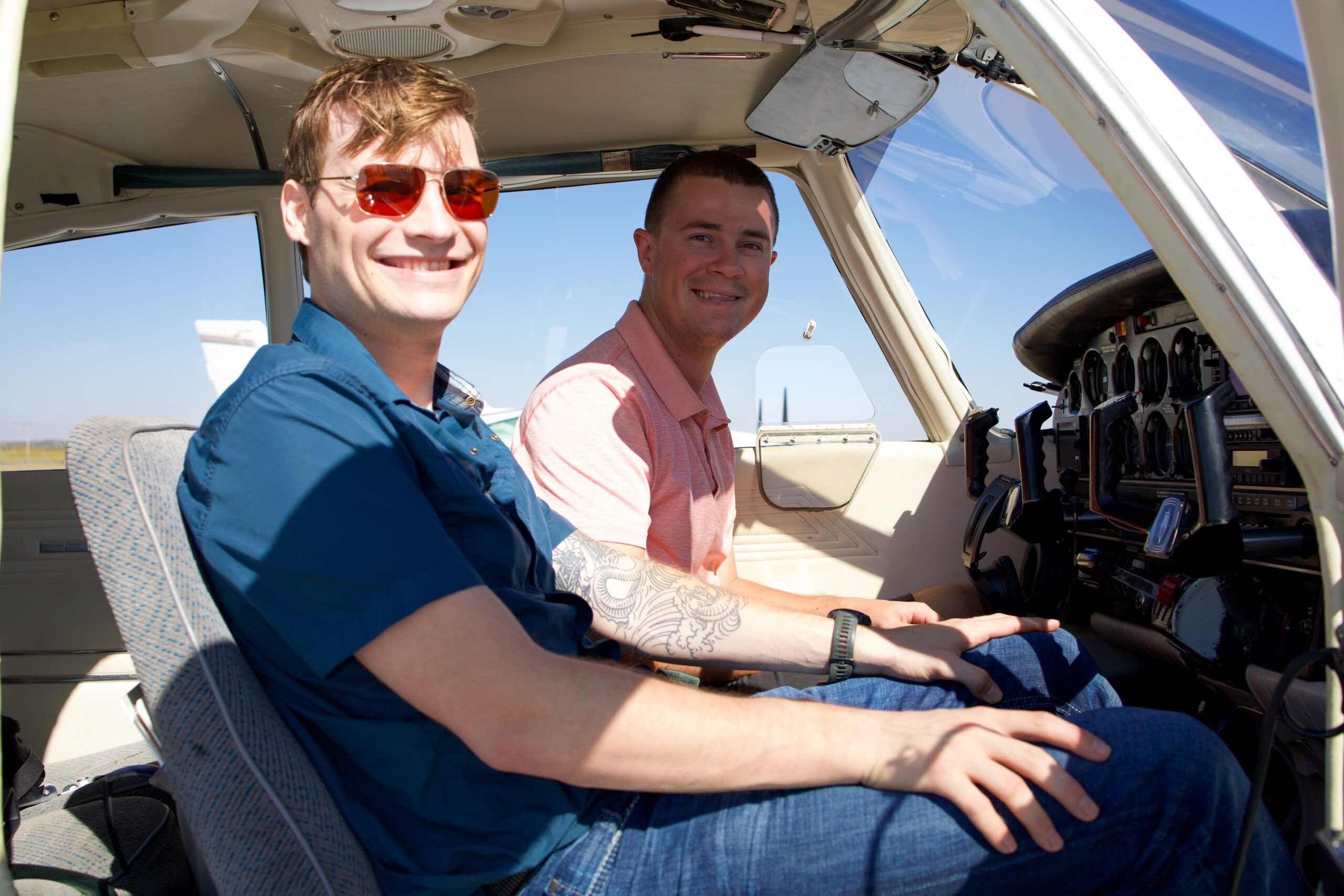
During this flight, you sit in the pilot seat of a Cessna 172 alongside a certified flight instructor. Once you are safely in the air over Yukon and Oklahoma City, the instructor will hand the controls over to you. You will feel how the aircraft responds to your inputs. You will see the horizon from a completely new perspective. This flight helps you decide if aviation is truly the right path for you before you spend money on supplies or medical exams.
Step 2: Secure Your Medical and Student Certificates
Before you can fly an airplane by yourself, you must prove you are healthy enough to operate an aircraft safely. You will visit an Aviation Medical Examiner to obtain an FAA Third-Class Medical Certificate. This is a basic physical exam that checks your vision, hearing, and general health.
At the same time, you will apply for your Student Pilot Certificate. Your instructor will help you fill out the application through the FAA website. Once approved, this certificate allows you to log flight hours officially.
Step 3: Complete Pilot Ground School
Flying an airplane is only half the battle. You also must understand the science and rules of aviation.
Enrolling in a pilot ground school is mandatory. During ground school, you learn about aerodynamics, weather patterns, aircraft systems, navigation, and FAA regulations. This knowledge keeps you safe. You must pass a multiple-choice FAA written exam to prove your understanding.
To help you succeed, you can review helpful tips on preparing for the FAA private pilot written exam. Mastering this material early makes your actual flight lessons much easier.
Step 4: Master the Aircraft and Fly Solo
This is where the real fun begins. You will pair up with a dedicated flight instructor and begin your Private Pilot Training.
Your early lessons focus on basic maneuvers. You learn how to climb, descend, turn, and fly straight and level. Soon, you move on to the traffic pattern, where you practice takeoffs and landings repeatedly.
Once your instructor sees that you can take off, fly the pattern, and land the airplane safely without their help, they will step out of the aircraft. You will take off and land completely alone. This is your first solo flight, and it is a milestone you will remember for the rest of your life.
Step 5: Cross-Country Flying and the Checkride
After your solo, you learn how to navigate away from your home airport. You will plan flights to other cities, learn how to read aeronautical charts, and practice communicating with air traffic control.
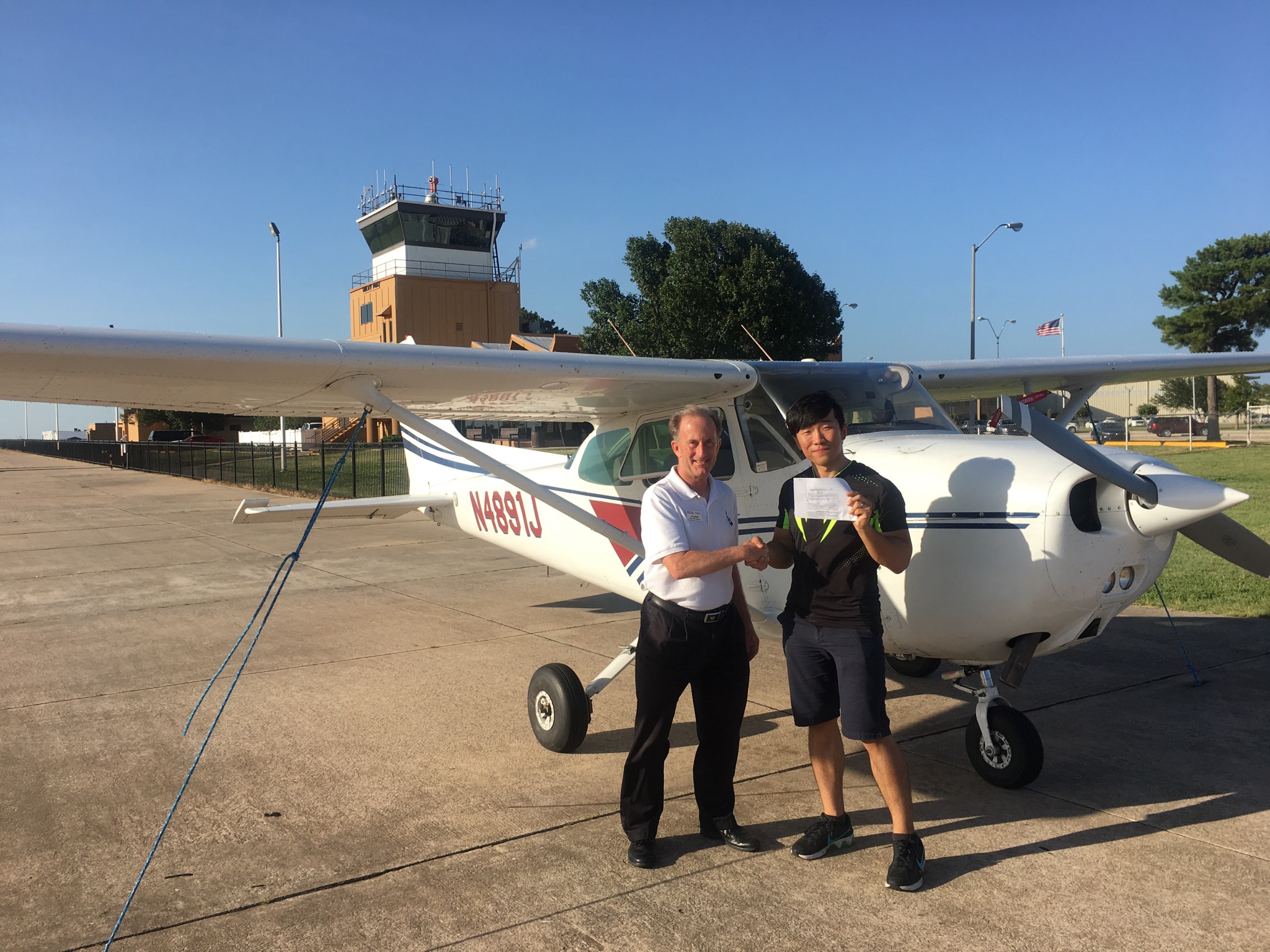
Once you reach the required 40 flight hours and your instructor confirms you meet all the standards, you will take your final exam. This is called the checkride. An FAA examiner will test your knowledge on the ground and then evaluate your flying skills in the air. When you pass, you officially become a private pilot.
Why Sundance Airport Beats Busy Commercial Hubs
If you are searching for a flight school okc location, you must pay attention to where the school actually operates. The airport you choose has a massive impact on your training budget and your timeline.
Many schools operate out of busy Class C commercial airports. At those locations, you will spend a large portion of your lesson sitting on the taxiway. You pay for the Hobbs meter time while the engine is running, which means you are spending money waiting for large passenger jets to take off and land.
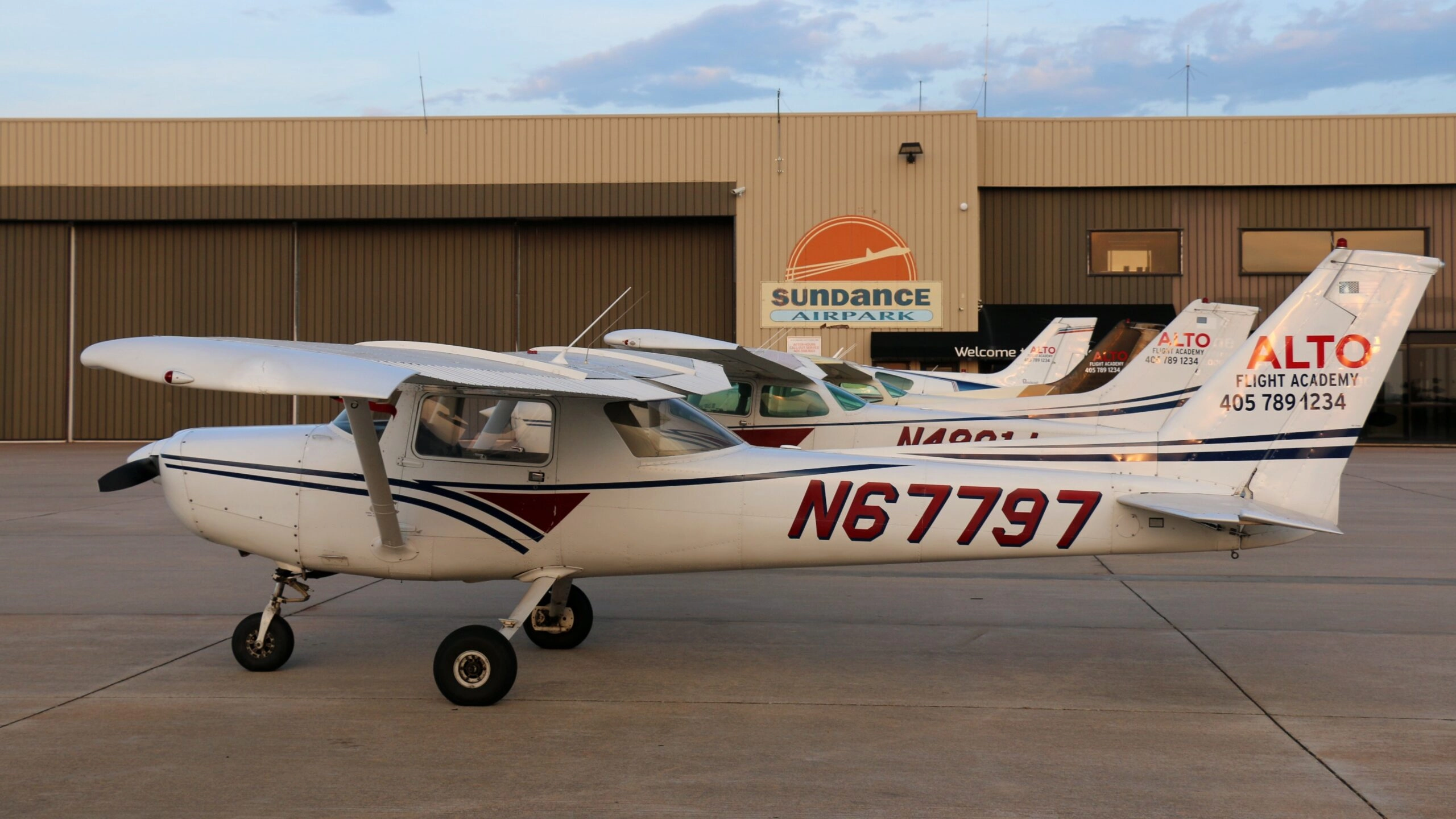
Your training deserves the best environment. Alto Flight Academy is located at Sundance Airport (KHSD) in Yukon, right on the edge of the Oklahoma City metro area. Sundance is an uncongested general aviation field. When you start the engine, you taxi to the runway and take off almost immediately. You do not waste your training budget waiting in line.
At the same time, Sundance is located directly adjacent to Oklahoma City airspace. This means you still get plenty of practice talking to air traffic control without dealing with the delays. The location is also perfect for students seeking El Reno flight training options, as it is just a short drive east on Interstate 40. You get the convenience of a rural airport with the professional benefits of a major city environment.
Fly Safe, Fly Often: How the Fleet Keeps You in the Air
A flight school is only as good as its airplanes. If the aircraft are constantly broken down, your training will stall.
Because Alto Flight Academy operates under Part 61 rules, there are no rigid university timelines. You set your own pace. But to fly fast, you need airplanes that are ready to fly.
The academy employs a dedicated on-site Aircraft and Powerplant Mechanic named Beau. Because the maintenance happens right there on the field, the aircraft spend less time in the shop and more time on the flight line. If an airplane needs a quick inspection or a repair, it gets done immediately. This means fewer canceled lessons for you.
You will train in reliable Cessna 172 aircraft. The fleet features modern technology, including Garmin 430W GPS systems and ADS-B In & Out with Bluetooth. You learn to fly using the same advanced avionics you will eventually use in professional aviation.
When you are ready to advance your career, you have local access to complex and multi-engine aircraft right on the same ramp. You can seamlessly transition into the retractable-gear Cessna 172RG or the 6-seat Beech Baron for your Multi-Engine Rating.
Conquering Oklahoma’s Crosswind Laboratory
Some students look for flight schools in locations with perfectly calm weather every single day. That sounds nice, but it creates a dangerous problem.
If you only ever practice flying in perfect weather, you will panic the first time you encounter real wind. Airlines and commercial operations fly in turbulent, challenging weather. You need to know how to handle the aircraft when the air gets rough.
Oklahoma is situated right in Tornado Alley. The region is known for dynamic southwesterly winds, sudden gusts, and rapid weather changes. The instructors treat this environment as a natural “crosswind laboratory.”
You learn how to land an airplane safely when the wind is trying to push you off the runway. You develop strong rudder skills and excellent decision-making habits. Statistical data shows that runway excursions during landing account for roughly 20% of commercial jet accidents. Training in Oklahoma’s challenging winds ensures you will not become part of that statistic. You graduate as a highly capable, confident pilot who is not afraid of a little weather.
A Dedicated Mentor for Your Aviation Journey
Alto Flight Academy is not a massive, faceless corporation. It is a family-run business operated by Hal Harris, MariCris Harris, and Grace Manglicmot. As a female and Asian-owned business, the school places a heavy emphasis on inclusion and making sure every student feels welcome.
When you train here, you are not just a number on a schedule. You receive personalized mentorship from instructors who truly care about your goals. Whether you are aiming for the airlines or just want to fly for fun, the team guides you through every step of the process.
Frequently Asked Questions
-
How much does it cost to get a Private Pilot License?
Training costs vary based on how often you fly and how quickly you master the maneuvers. Because you pay per flight hour, consistent practice usually results in a lower total cost. If you are concerned about the upfront investment, please contact the enrollment team to discuss available financing options.
-
How long does it take to finish the program?
Under Part 61 rules, you control your timeline. If you fly three to four times a week, you can finish your certification in three to four months. If you fly once a week, it may take six to nine months to complete the required hours.
-
Do I need a college degree to learn how to fly?
No. You do not need a degree to earn any pilot certificate, and you do not need a degree to become an airline pilot. The FAA only requires you to be able to read, speak, and understand the English language.
-
Can I start training if I am under 18 years old?
Yes. You can begin flight lessons at any age. You must be at least 16 years old to fly an airplane solo, and you must be 17 years old to take the final checkride and earn your actual Private Pilot License.
-
What happens if the weather is bad on the day of my lesson?
Safety is the ultimate priority. If the winds are too strong or thunderstorms are in the area, you will not fly. Instead, your instructor will use that time to complete ground school lessons, study weather patterns, or prepare for your written exam.
-
How do I learn more about the official FAA rules?
You can read all the official requirements for pilot certification directly on the FAA Becoming a Pilot website.
Are you ready to take the first step toward the sky? Stop watching the airplanes fly over Oklahoma and get into the pilot seat. Book your Discovery Flight today, or contact the Alto Flight Academy team to map out your personalized training plan.